How to Style a Coffee Table with What You Already Have
A coffee table does not need a shopping haul to look considered. A couple of books, a simple vessel and space for everyday use can be enough. Start with what is already in your home, then arrange it so the table feels useful as well as beautiful.
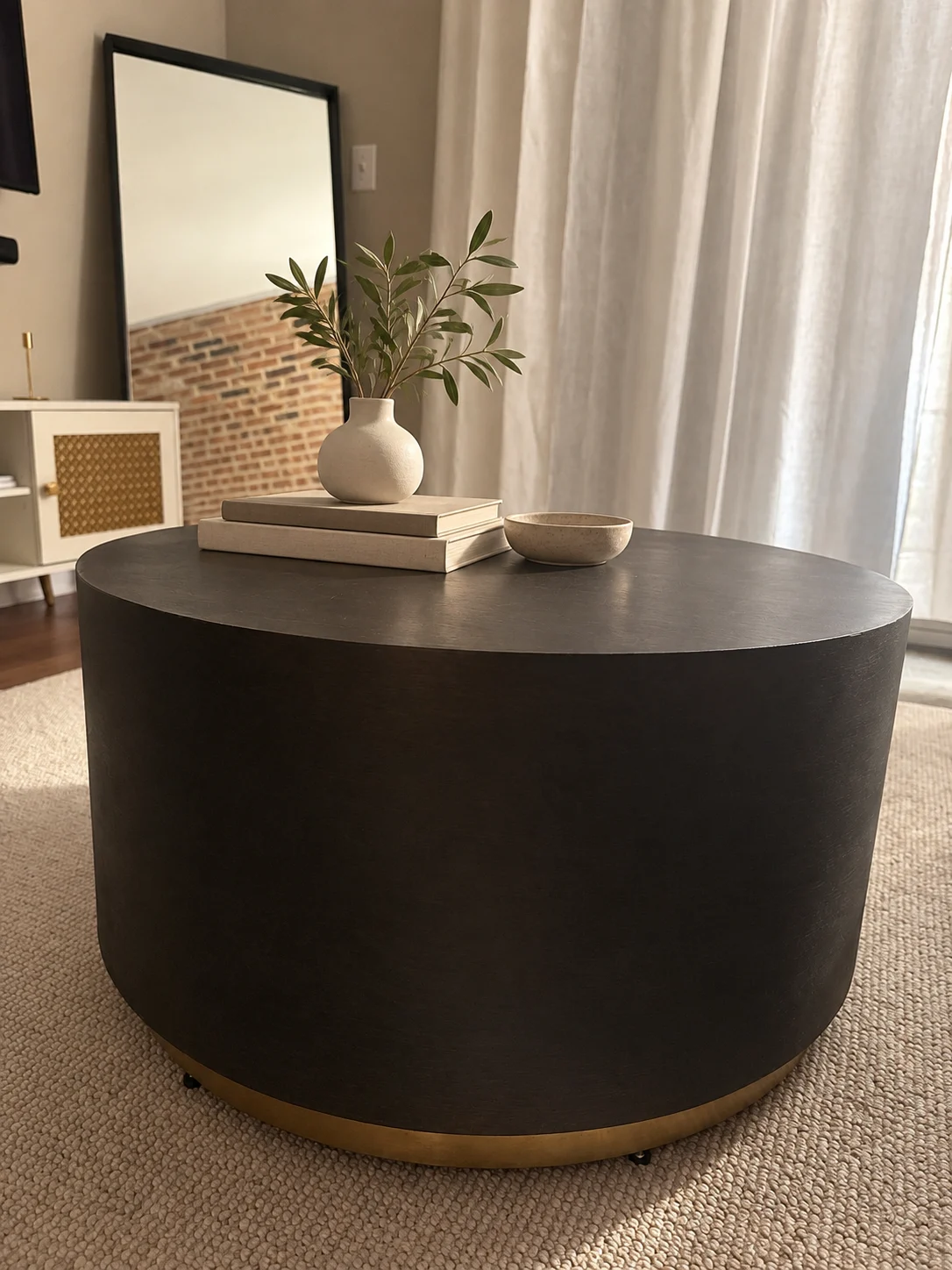
1. Clear the surface before you style it
Remove everything first. Wipe the table, then separate the things you use daily from the things you want to display. Remotes, tissues and chargers can have a nearby home in a drawer or basket. If you need them on the table, give them one small, easy-to-reach spot.
Look at the table itself. A dark, rounded table already has a strong shape, so it can carry a very simple arrangement. You do not have to cover an interesting surface to make it feel finished.
2. Choose a few pieces you already own
Gather two or three possibilities from around the house. Try a book you enjoy, a small bowl or a vase from another room. A favorite mug or an empty glass jar can stand in for a decorative vessel. You are looking for a useful combination, not a matching set.
- Something low: one or two books, a shallow bowl or a small tray.
- Something taller: a vase with a few stems or a compact plant.
- Something practical: a coaster or a dish for small everyday items.
These are options, not a requirement to use all three. On a small table, a single vase and a coaster may be plenty.
3. Vary the heights without blocking the view
A low stack of books gives a small object a base. A vase adds height, while a shallow bowl creates a softer contrast. In the styling idea above, the pale objects stand out against the dark table without adding a lot of color.
Keep the tallest piece low enough that people seated across from each other can still talk comfortably. If your vase feels too tall or too wide, try fewer stems or move it to a side table.
4. Work with the shape of your table
For a round table: group the objects loosely near the center or slightly to one side. Leave space around the arrangement so you can reach the surface from different seats.
For a rectangular table: try one compact group toward an end, or two small groups with a clear gap between them. Avoid lining every object along the edge.
For a very small table: choose one main piece. A tray is helpful only if it makes daily use easier; you do not need to buy one to complete the look.
5. Repeat a color or texture from the room
Let the surrounding furniture guide your choices. An ivory vase can connect to light curtains or cream seating. A wooden bowl can echo warm furniture, while a green stem brings a little contrast to a neutral space.
Matching every item is unnecessary. Try repeating one material or color, then keeping the remaining pieces quiet. If the arrangement feels busy, remove an object before adding another.
6. Leave room for real life
Make sure there is still a comfortable place for a drink, a snack or whatever you normally put on the table. Choose stable objects, protect the finish with coasters and keep fragile items within a sensible reach for your household.
The arrangement should be easy to move when you need the whole surface. A beautiful table that constantly gets in your way is ready for another edit.
Your five-minute starting plan
- Clear and clean the table.
- Gather a book, a vessel and one small practical piece from your home.
- Try a compact group with different heights.
- Remove anything that blocks the view or takes up needed space.
- Live with it for a day before deciding whether anything is missing.
You may find that nothing needs buying. If one useful piece is missing, measure the space and decide what it needs to do before you shop.
For more ideas, see my cozy neutral living room or read how to make your home look expensive on a budget.
Back to the journal