How I Created a Cozy, Neutral Living Room on a Budget
A beautiful home does not have to begin with a large shopping budget. Many of my home furnishings came from Facebook Marketplace. I have also bought pieces from stores such as HomeGoods and At Home. This is my living room, and the ideas below show how to bring a room together with what you already have.
Affiliate disclosure: This post contains an affiliate link. If you shop through it, I may earn a commission at no additional cost to you. As an Amazon Associate I earn from qualifying purchases.
Start with the room you have
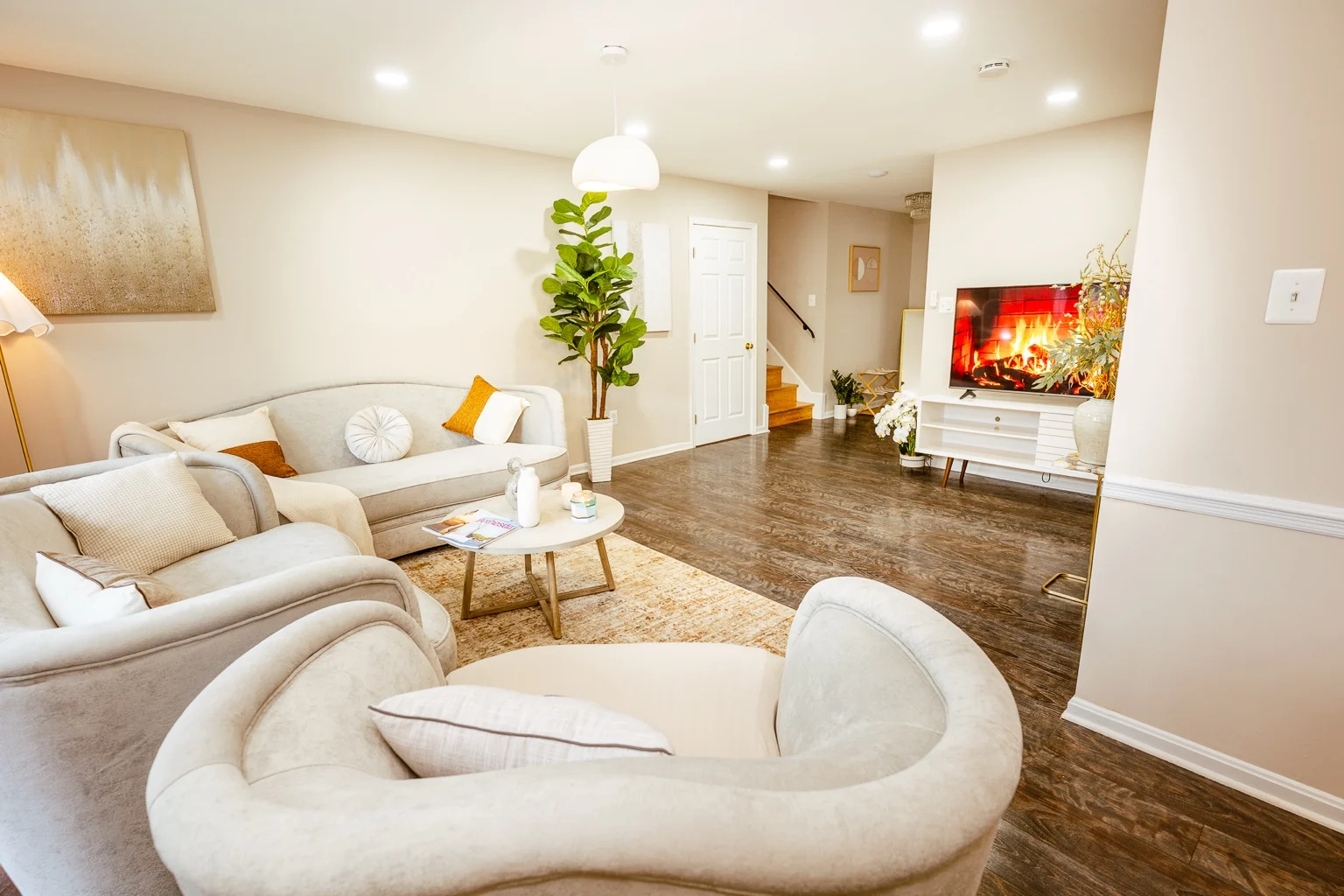
Before making a shopping list, look at the furniture, floor and walls already in your space. In my room, the light seating sits against warm beige walls, while the darker floor gives the pale furniture definition. Those existing elements provide a starting palette.
Try moving your furniture and clearing surfaces before buying anything. A chair facing the sofa can make a seating area feel connected. Leaving a clear route through the room helps the arrangement feel comfortable rather than crowded.
Use a small, flexible color palette
The room in the photograph combines cream, beige and warm brown, with mustard cushions and green plants as accents. The pieces do not need to match exactly: related shades help different purchases feel at home together.
For your own room, choose a main neutral from your largest existing piece. Repeat it in two or three smaller details, then use one accent color you enjoy. This gives you a useful filter when browsing secondhand listings, instead of buying a piece simply because it is inexpensive.
Let the rug connect the seating
A rug helps define the seating area within an open room. Here, its light tones connect the cream furniture to the darker floor, and its pattern adds texture without introducing another strong color.
Measure your seating area before you shop. Consider a rug large enough for the front legs of the main seating to rest on it, if your layout allows. Mark the proposed size on the floor first; a bargain is only useful if it fits the room.
Mix secondhand finds with selected new pieces
Facebook Marketplace has been part of how I furnished my home. You can mix secondhand furniture with a few new details over time rather than purchasing an entire matching room at once. The goal is a room that works for your everyday life.
When considering a secondhand piece, ask for dimensions, close-up photographs and information about its condition. Inspect upholstery, seams, joints and drawers before paying. Include transport and any cleaning or repairs in your budget. If the total stops being affordable, keep looking.
For upholstered furniture, check carefully for odors, stains and signs of pests. Arrange a pickup with your safety in mind, and avoid sending a deposit just to secure a listing you have not verified.
Choose one detail that gives the room character
In my room, the white pendant brings a sculptural shape above the seating. The rounded furniture echoes that softness, while the tall plant adds height and color. You can create a focal point with something you already own: artwork, a lamp or an interesting chair.
My Wabi Sabi–inspired pendant
I purchased this pendant for my living room and bedroom. You can see it installed in the photograph above and read more about it in my pendant light article.
View the pendant on AmazonPaid link. Check current dimensions, installation requirements, price and availability before ordering.
Add texture before adding more things
A neutral room can still have variety. In the photograph, the curved seating, patterned rug, cushions and leafy plants each contribute a different texture or shape. Keeping some surfaces open lets those details stand out.
Try a cushion cover, a throw you already own or a small rearrangement before adding more décor. Take a photograph of the result: it can help you notice a crowded corner or a color that feels disconnected.
A simple plan for your own room
- Measure the room and the furniture you plan to keep.
- Choose a small palette based on those existing pieces.
- Rearrange the seating and leave clear walking space.
- Write down one useful missing piece and set a total budget, including delivery.
- Compare secondhand and new options, then buy only when the fit and condition make sense.
My home includes purchases from different places, and I have not identified every exact product in this photograph. The styling ideas are meant to help you work with your own pieces, rather than recreate a shopping list item by item.
For more ideas, read how to make your home look expensive on a budget or explore neutral décor finds for a cozy living room.
Back to the journal